


The Internet of Things (IoT) simply means devices with an on/off switch that are connected to the internet. These devices can send and receive data, allowing machines to communicate with each other. This idea didn’t appear overnight. As far back as the 1830s and 1840s, the telegraph allowed messages to be sent over long distances.
In 1900, the first radio voice transmission added another step toward wireless communication. Computers emerged in the 1950s, further advancing technology. The internet began in 1962 as a project by the Defence Advanced Research Projects Agency (DARPA) and later developed into the ARPANET in 1969. By the 1980s, it became available to the public and evolved into the modern internet we use today. Today, most IoT communication relies on satellites and landlines.
Kevin Aston
Let us learn a little about the origin. Kevin Ashton, a British technology pioneer best known for coining the term Internet of Things (IoT) in 1999. He gave a name to a concept that now powers smart homes, smart cities, and industrial automation. His work helped shift technology from human operated systems to machine to machine communication. He played a key role in early research that led to modern tracking, logistics, and connected devices
How do I bring my IOT Dreams Alive?
Physical Hardware
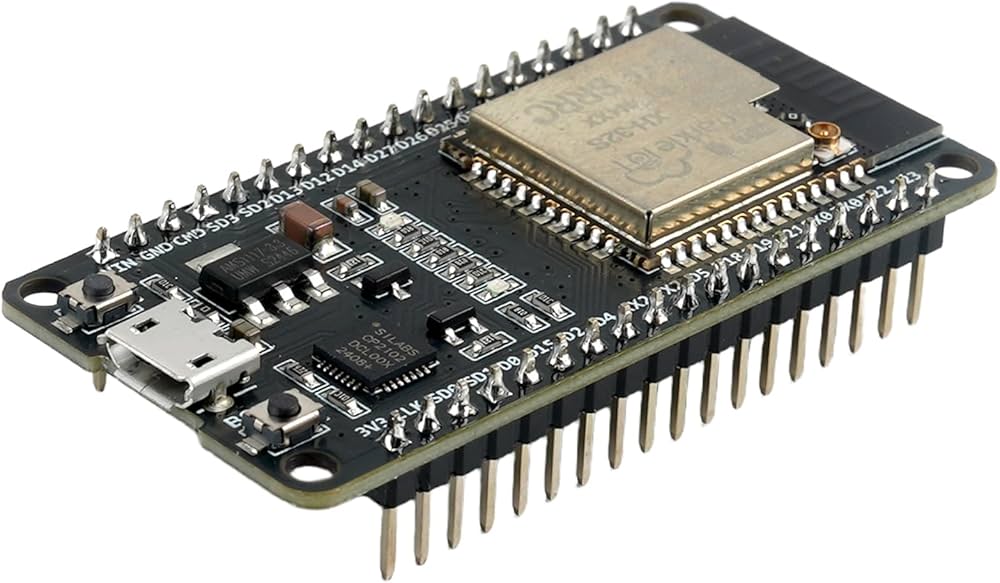
To build an IoT system, you first need physical devices that can sense and interact with the real world.
Sensors
These collect data from the environment, such as temperature, humidity, light, or motion. For example, a DHT22 measures temperature and humidity, while an LDR detects light levels.
Actuators
These carry out actions based on instructions. Examples include motors, pumps, or smart lights that can be turned on or off automatically.
Microcontrollers / Development Boards
These act as the “brain” of the system, processing data and running your code. Common options include:
- ESP32 / ESP8266, affordable and widely used, with built-in Wi-Fi.
- Raspberry Pi small computer suitable for more complex tasks.
- Arduino boards ideal for beginners and quick prototyping.
Together, these components allow IoT devices to sense, think, and act in the physical world.
Connectivity
For an IoT system to work, devices must be able to send data to the cloud and receive instructions. This is made possible through different communication technologies, each suited to specific needs.
LoRaWAN
Best for long-range, low-power communication. It’s ideal for applications like agriculture or environmental monitoring where devices are spread out and need to run on batteries for a long time.
Wi-Fi
Commonly used for indoor or local projects. It however, offers high data speeds and is perfect for smart home devices, but it consumes more power.
Bluetooth / BLE
Designed for short-range communication, especially between devices and smartphones. Bluetooth Low Energy (BLE) is optimized to use less power.
Data Processing & Cloud Platforms
Once data is collected from devices, it needs to be processed, stored, and analyzed to be useful.
IoT Platforms / Cloud
These are online services that manage devices, store incoming data, and provide tools for analysis and visualization. Popular examples include Arduino IoT Cloud, AWS IoT Core, Particle Cloud, and Google Cloud IoT. They allow you to monitor devices remotely and make decisions based on real-time data.
Firmware / Software
This is the code that runs on the device itself. It is responsible for reading sensor data, controlling actuators, and sending information to the cloud. Common programming languages include C/C++, Python, and MicroPython.
Together, cloud platforms and device software turn raw data into meaningful insights and automated actions.
User Interface
Mobile Apps / Web Dashboards
These platforms let you view data and control devices in real time. For example, apps like Blynk or dashboards like Grafana allow you to monitor sensor readings, see graphs, and send commands like turning devices on or off.
In simple terms, the UI is what makes your IoT system easy to use, turning raw data into clear visuals and giving you control at your fingertips.
Power Supply
IoT devices need a reliable source of power to operate continuously, especially in long-term or remote deployments.
Batteries
Common for portable and remote devices. They are easy to use but need to be replaced or recharged over time.
Solar Power
Ideal for outdoor or hard-to-reach locations. Solar panels can recharge batteries, making the system more sustainable and low-maintenance.
Direct Power Supply
Devices can also be powered through a constant source like a wall adapter or mains electricity, which is suitable for indoor or fixed installations.
Choosing the right power source depends on where the device is used, how long it needs to run, and how much energy it consumes.
From smart homes and healthcare to agriculture and industrial automation, IoT is improving efficiency, responsiveness, and overall intelligence in modern systems. As the technology advances, it will continue to play a bigger role in addressing real-world challenges and enhancing everyday life.
For both beginners and innovators, IoT provides countless opportunities to build meaningful and practical solutions in a more connected world.
Reach out to AnyComponentLab.com and begin your journey into the world of IoT.